

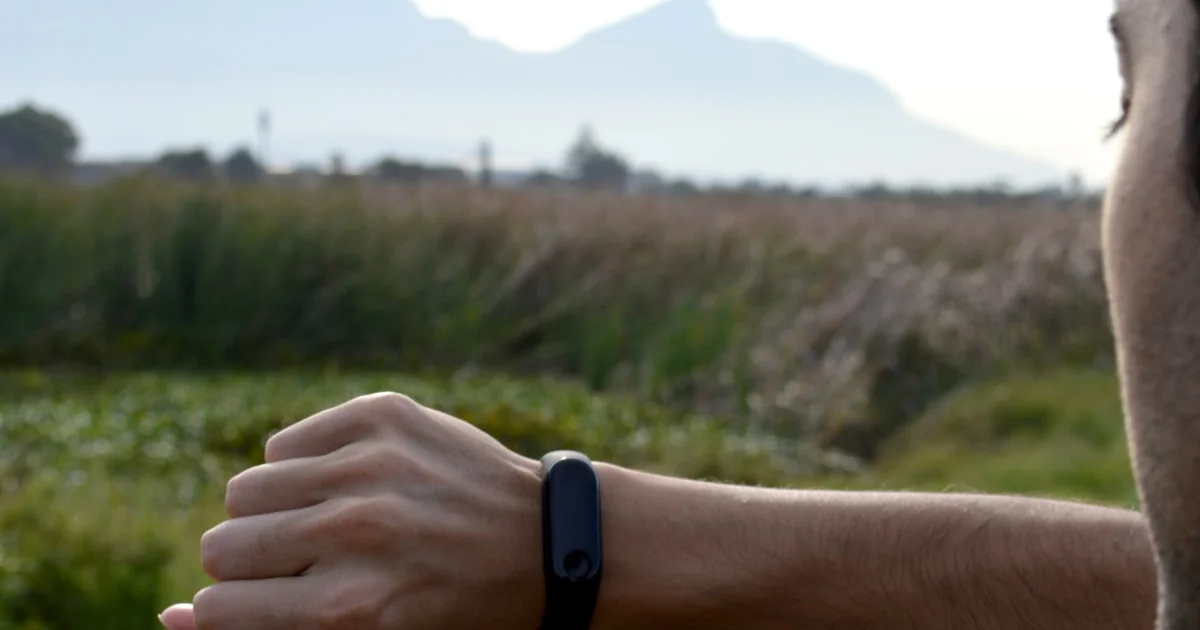
Most people buy a tracker for the feature list and end up using three things: steps, sleep, and heart rate. The fitness tracker buying guide tips that actually save money start with one question — what will you look at every morning? Everything the device does beyond that is decoration you paid for.
Key Takeaways
- Pick three metrics you will actually check. Buy for those, ignore the rest of the spec sheet.
- Comfort beats sensors. A tracker in a drawer records nothing at any price.
- Built-in GPS is the one real price jump. Skip it if your phone comes along anyway.
- Trends are trustworthy; single readings are not. Judge weeks, not workouts.
- Check for a subscription before you buy. Recurring fees can double the real cost.
Fitness Tracker Buying Guide Tips That Start With You
The short answer: the best fitness tracker buying guide tips tell you to define your goal first and let the goal eliminate the models. A person who wants a nudge to walk more needs almost nothing. A runner training for a half marathon needs pace, distance and reliable heart rate. Those are different purchases.
Write down your top three goals on paper. Increase daily movement. Sleep more consistently. Watch resting heart rate. Whatever they are, treat the list as a filter — if a feature does not serve one of the three, it is not a reason to spend more.
Match the Device to the Activity
General wellness needs step counting, continuous heart rate, sleep tracking and a clear app. Endurance training needs GPS, pace zones, interval support and real water resistance. Recovery-focused users care about resting heart rate, heart-rate variability and sleep stages. A device that is excellent at one of these is often mediocre at another, and no wearable replaces medical equipment or professional advice.
Fitness Tracker Features Worth Paying For
Not all fitness tracker features cost the same to build, and price tracks that closely. Here is where the money actually goes.
Heart-Rate Monitoring
Optical wrist sensors are standard now, but readings shift with fit, skin tone, tattoos, temperature and how much your arm moves. A snug band a finger-width above the wrist bone improves accuracy more than any setting in the app. If precise training zones matter, buy a tracker that pairs with an external chest strap rather than paying up for a “better” wrist sensor.
GPS and Distance
Built-in GPS records routes without your phone and is the single feature most responsible for price jumps within a brand’s lineup. Connected GPS borrows your phone’s signal — same route accuracy, lower cost, better battery. If your phone is in your pocket on every run anyway, connected GPS is the smarter buy.
Sleep and Recovery
Sleep stages are estimated from motion and heart rate, not measured. They are genuinely useful for spotting patterns and useless as a clinical number. What matters more is whether the band is light enough to forget overnight and whether the battery survives a week, because a tracker charging at bedtime collects nothing.
Battery Life
Published battery figures assume moderate use. Always-on displays, daily GPS, continuous blood-oxygen checks and constant notifications can halve them. Decide honestly whether you will charge nightly, weekly, or resent charging at all — then read the fine print on what was switched off to reach the advertised number.
Water Resistance
Water resistant is not waterproof. A rating that covers rain and handwashing may not cover laps in a pool or a hot shower, where pressure and heat both matter. Swimmers should look for explicit pool tracking and stroke detection, not just a depth number on the box.

Fitness Band vs Smartwatch Comparison
The honest fitness band vs smartwatch comparison is not about accuracy — it is about how much of a computer you want strapped to your arm.
A band is smaller, lighter, cheaper, and runs for days. It shows you activity and gets out of the way. A smartwatch adds a larger screen, apps, voice, calls, music control and deeper phone integration, and charges that back in price, weight and nightly charging. Neither is inherently more accurate; sensor quality, fit and software matter far more than the category.
| If you mainly want | Buy | Why |
|---|---|---|
| More daily movement | Basic band | Steps and nudges are all you will open |
| Running and cycling data | GPS sports watch | Pace, routes and intervals without a phone |
| Sleep and recovery trends | Lightweight band or ring | Comfort overnight beats screen size |
| Notifications and apps too | Smartwatch | Only category that replaces phone glances |
| Swimming | Pool-rated watch | Stroke detection needs dedicated software |
| Lowest possible cost | Band, previous generation | Sensors change slowly; prices drop fast |
How to Judge Accuracy Without a Lab
No consumer tracker is exact. Step counts inflate when you push a stroller or gesture while talking. Wrist heart rate lags during sharp intensity changes, which is why intervals are where straps still win. Calorie burn is a formula fed by your height, weight, age and movement — an estimate wearing the costume of a measurement.
Test fairly. Wear the device on the recommended wrist, positioned as the manual says, and repeat the same route or workout several times. Compare weeks against weeks. If a number would change a health decision, confirm it with a clinician or a validated medical device instead.
Budget Fitness Tracker Buying Checklist
Run through this budget fitness tracker buying checklist in order before you pay. It is designed to catch the costs that appear after checkout.
- Name your three metrics. If a feature serves none of them, it is not worth a price increase.
- Confirm phone compatibility — including the minimum OS version, not just iPhone or Android.
- Check battery life with your settings, meaning GPS and notifications on, not the box figure.
- Read the water rating against your actual activities, especially swimming and showering.
- Find out what sits behind a subscription before you buy, not after the trial ends.
- Price a replacement band. Proprietary straps quietly add up over two years.
- Check the return window — comfort is only testable after a week of wear.
Mistakes That Cost Real Money
Buying on price alone is the common one. Very cheap models often pair a decent sensor with an app that syncs unreliably, loses history and documents nothing about where your data goes. The opposite mistake costs more: buying a premium multisport watch and using step counting.
The quiet one is data policy. Wearables hold location, sleep and health-adjacent information indefinitely. Before you commit, check that you can export your history and delete your account, and that two-factor authentication is available. That is worth more than an extra sensor.
The Bottom Line
Start with three metrics, buy the cheapest device that covers them well, and put the savings toward a comfortable band you will wear overnight. Skip built-in GPS if your phone travels with you, treat every reading as a trend rather than a fact, and total the subscription and strap costs before you decide. The tracker you keep wearing in month six is the one that was worth buying.
Related Articles
- Best Heart Rate Monitor Chest Strap: Accuracy and Buying Guide
- Best Smart Doorbell Camera Buying Guide for 2026
- Best Wireless Mouse for Productivity
Frequently Asked Questions
These come up most often from first-time buyers weighing price against features.
How much should a beginner spend?
A budget band covering steps, heart rate, sleep and basic workouts is enough for most people starting out. Spend more only when a specific limitation annoys you — usually missing GPS or a screen you cannot read outdoors.
Is a fitness tracker accurate enough for health decisions?
It is accurate enough to show patterns and keep you motivated, and not accurate enough to diagnose anything. Bring unusual or persistent readings to a qualified healthcare professional rather than acting on them yourself.
Do I really need built-in GPS?
Only if you exercise without your phone. Connected GPS gives you the same route and pace data at a lower price and with noticeably better battery life.
Band or smartwatch for sleep tracking?
A band, almost always. It is lighter, less intrusive overnight, and lasts long enough that you can charge it during the day instead of at bedtime.


2 Comments
Comments are closed.