

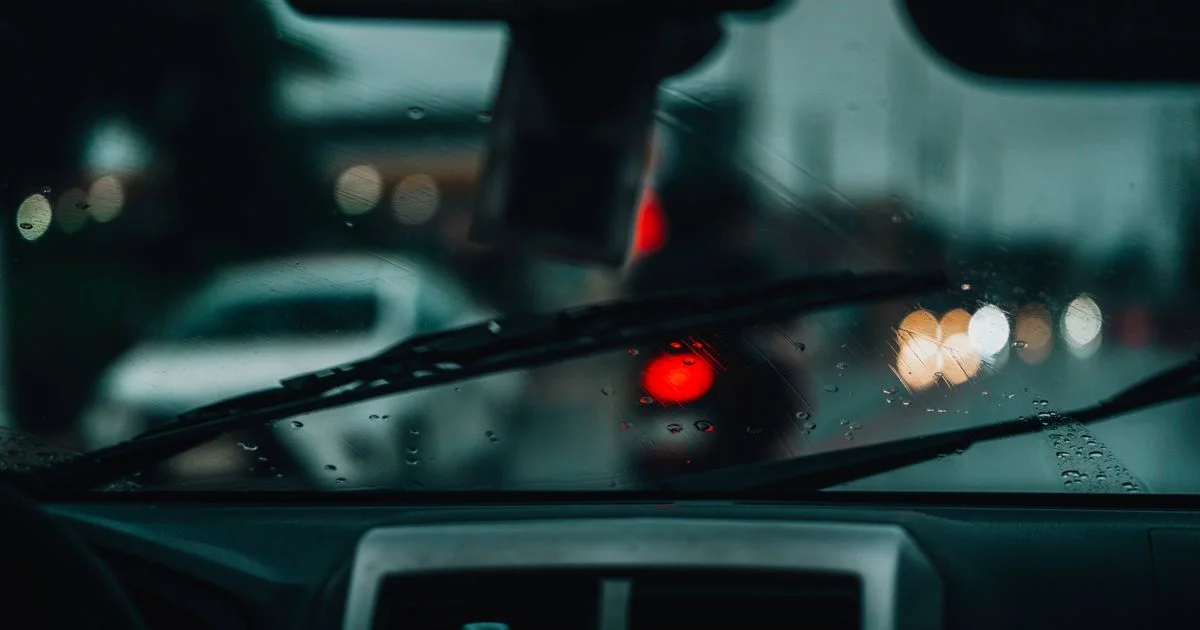
There is a fair chance your car has been recording you for years. Not video, and not continuously, but a short burst of hard numbers around a crash, kept in a box nobody mentions at the dealership. Knowing that changes what a dash cam for cars is for, because the camera is not adding a record of the impact. It is adding a record of everything outside the car that the impact record leaves out.
Scope and sourcing: where a camera may legally be mounted on a windshield, and whether it may record audio, are set by state law and vary widely. This article does not cover either, and you should check your own state’s rules before mounting anything. The federal material below comes from 49 CFR Part 563 and the Driver Privacy Act of 2015 and is general information, not legal advice.
Use case 1: what a dash cam for cars adds to what the car already keeps
The federal rule is 49 CFR Part 563, which “specifies uniform, national requirements for vehicles equipped with event data recorders (EDRs) concerning the collection, storage, and retrievability of onboard motor vehicle crash event data.” The regulation defines an event data recorder as “a device or function in a vehicle that records the vehicle’s dynamic time-series data during the time period just prior to a crash event or during a crash event, intended for retrieval after the crash event.”
The applicability section dates your car for you. Part 563 covers passenger cars, multipurpose passenger vehicles, trucks and buses rated at 8,500 pounds or less, “manufactured on or after September 1, 2012, if they are equipped with an event data recorder.”
That last clause is the one to sit with. The rule does not require a car to have an EDR. It says that if one is fitted, it has to record the same things, in the same way, so the data means something to an investigator. There is also a retrieval obligation: a manufacturer has to ensure “a tool(s) is commercially available that is capable of accessing and retrieving the data stored in the EDR,” within ninety days of the first sale.
The division of labor follows. The car’s own recorder holds a short burst around an impact and takes a tool to read. A camera holds the road: who ran the light, which lane the other car was in. Only one of them is about what somebody else did.
- A crash record from the car is about your vehicle’s behavior, not the other driver’s.
- It exists only around an event; it is not a continuous log of your journeys.
- Reading it needs equipment, which in practice means a professional, an insurer or an investigator.
- A camera covers the part nobody else is recording, which is everything outside the glass.
- Neither one decides fault. Both are inputs to somebody else’s decision.
Use case 2: dash cam for daily commuting, and the card that wears out first
The case for a dash cam for daily commuting is the mileage: the same roads, twice a day, in whatever light the season supplies. It is also the use that destroys memory cards, because a camera in loop mode overwrites the card continuously for the whole of that commute, every day, for years.
Here is where the packaging gets interesting. The SD Association publishes symbols for how fast a card writes, and that family is long: C2, C4, C6 and C10 for the original Speed Class, U1 and U3 for UHS, V6, V10, V30, V60 and V90 for Video Speed Class, and E150 through E600 for SD Express. The organization explains why they exist: “variable speeds are difficult to reliably record streaming content such as video because it requires a constant writing speed,” and a class “assures minimum sequential card access performance including multiple stream access under defined conditions specified by the standard.”
Now read that list again for the thing that is not on it. There is no endurance class. The standards body that defines how fast a card must write defines nothing at all about how many times it can be rewritten before it fails. The words “high endurance” on a package are a manufacturer’s claim sitting next to a real certified symbol, and nothing checks them against a common test the way the speed mark is checked.
That is not a reason to ignore endurance cards, which are built differently and generally do last longer in this job. It is a reason to treat the claim as a brand’s promise rather than a certification, and to replace the card on a schedule instead of discovering it failed on the one morning it mattered. The same physics runs underneath ordinary computer storage, and our guide to SSD for Gaming PCs works through what write endurance means in practice.

Use case 3: dash cam for insurance claims, and who is allowed to read the data
Buying a dash cam for insurance claims is the commonest reason given, and it is worth separating two kinds of evidence that get talked about together.
Footage from your camera is yours in the ordinary sense: it is a file on a card in your car, and you decide whether to hand it over. The car’s own crash data is governed by statute. The Driver Privacy Act of 2015 states that any data retained by an event data recorder “is the property of the owner, or, in the case of a leased vehicle, the lessee,” and then lists the narrow circumstances in which anyone else may retrieve it:
- Where “a court or other judicial or administrative authority having jurisdiction authorizes the retrieval.”
- Where the owner or lessee “provides written, electronic, or recorded audio consent.”
- Where the data is retrieved under an authorized federal investigation or inspection, with personal identifiers protected.
- Where it is used for “determining the need for, or facilitating, emergency medical response.”
- Where it is retrieved for traffic safety research with personal identifiers withheld.
The practical effect is that you control both disclosures, but the two records behave differently. Crash data is difficult to get at and hard to argue with. Footage is easy to get at and easy to argue about, because a dash cam for cars has a fixed field of view and a claim is usually a dispute about something at the edge of it.
One habit is worth more than any feature here: when something happens, pull the card or lock the file that day. Loop recording is a countdown, and a camera left running on a commute will overwrite the incident inside the week.
Use case 4: dash cam for road trips, and the oven the camera lives in
A dash cam for road trips spends most of its life not recording at all. It sits on a windshield in a parking lot, in summer, which is one of the harshest places in daily life to leave electronics.
The National Weather Service publishes the numbers, in the context of heatstroke rather than hardware, and they are worth reading with a camera in mind. “The temperature inside a vehicle can rise 20 degrees in as little as 10 minutes,” it says, and 50 degrees in an hour, both figures in Fahrenheit. Interior temperatures, it adds, can reach 120 degrees Fahrenheit in minutes and approach 150 in as little as an hour.
Nothing about a plastic housing, an adhesive mount and a memory card enjoys that, and the consequences are the mundane ones people actually experience: adhesive pads let go and the camera ends up in the footwell, and cards fail sooner than the mileage suggests they should. The road-trip habits that follow are small:
- Park in shade when the choice exists, which helps the camera for the same reason it helps everything else in the car.
- Take the camera off the glass for a multi-day stop rather than leaving it baking and visible.
- Treat a long trip as a reason to start with a fresh card, not to find out how the old one is doing.
- Copy anything worth keeping at the end of each day, while you still remember which day it was.
Use case 5: the things the footage will not settle
This category is sold on a certainty it cannot deliver, so it is worth saying what the recording will not do.
Footage does not decide fault. It goes to an adjuster or a court, alongside the other driver’s account and whatever the vehicles themselves recorded, and it is weighed. It also frequently fails to show the detail everyone wants, because incidents happen in rain, at dusk, into low sun and under streetlights, and a plate two lanes away at night is often a bright smear. A camera that looks superb in a daylight sample clip is being shown in the conditions it finds easiest.
Then there is the version owners actually meet. The card had failed quietly, or the file was overwritten before anyone looked, or the camera had come off the glass in the heat and was recording the glovebox. None of that is fixed by buying a better camera.
Side-by-side by situation
| Your situation | What actually decides it | What to stop worrying about |
|---|---|---|
| Same commute twice a day, year-round | Treating the card as a consumable and replacing it on a schedule | Resolution numbers in daylight sample clips |
| Expecting to use footage in a claim | A habit of pulling or locking the file the same day | Whether the camera can upload on its own |
| Long summer trips, car parked for hours | Shade, and taking the camera off the glass for multi-day stops | Marginal differences in night mode marketing |
| Car built from late 2012 onward | Knowing the car may already hold its own crash record, and that the data is yours | Buying a camera to capture what the car records anyway |
| Worried about wear and reliability | The speed class printed on the card, and the fact that endurance is not a class at all | The words on the front of the package |
Related Articles
- Best Smart AR Glasses for Gaming: Handheld, Couch, or a Flight
- Best Smart Mug for Coffee Lovers: Office Desk, Road Trip, or Tea
- Travel Neck Pillow With Speaker for Long Flights and Night Buses
Frequently Asked Questions
These are the questions that follow once the camera is on the glass and the first month has gone by. They are about what the recording is worth and what keeps it from existing when you want it.
Does my car already have a black box?
It may. Federal rules standardize what an event data recorder captures in light vehicles built from September 2012 onward, but only for vehicles that are equipped with one; the rule does not require the device. If your car has one, the data it holds is yours by statute, and reading it takes a tool that manufacturers are required to make commercially available.
Is a high endurance memory card worth buying?
Probably, but for a reason worth stating plainly. The SD Association certifies write speed through its class symbols and defines no endurance class at all, so “high endurance” is a manufacturer’s description rather than a certified rating. Cards sold for continuous recording are generally built to take it, and you should still replace the card on a schedule instead of trusting the wording.
Can an insurer demand my footage or my car’s crash data?
They are different things. Video on your own card is yours to share or not, subject to your policy and any legal process. Crash data from an event data recorder is the owner’s or lessee’s property under federal law, and someone else may retrieve it only in the five narrow circumstances the Driver Privacy Act lists above.
What is the single most common way people lose the footage?
Leaving it in the car. Loop recording overwrites the oldest file continuously, so on a daily commute an incident can be gone within days. The camera that quietly stopped working weeks ago comes a close second, which is why a thirty-second check of recent files once a month is worth more than any feature on the box.
Conclusion
A camera on the glass is worth having, and it is worth having for a narrower reason than the marketing gives: the car may already keep the crash, and it keeps nothing about the road. Buy for the conditions you actually drive in, treat the card as a part that wears out, and build the one habit that makes the whole thing work, which is getting the file off the card the day something happens.


1 Comment
Comments are closed.