

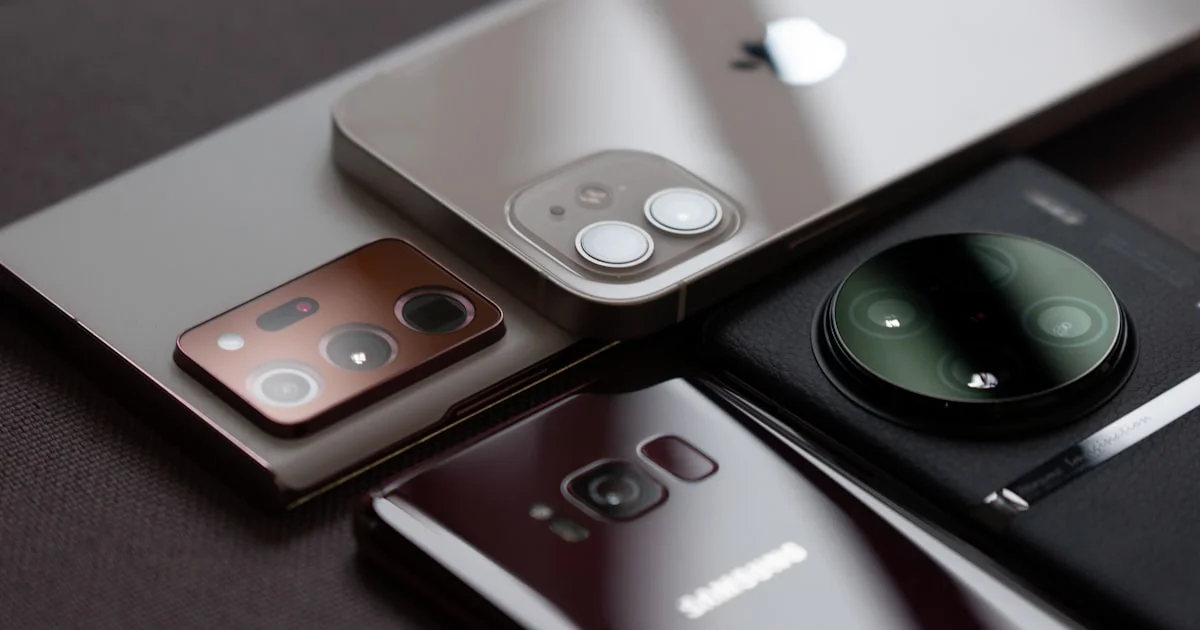
Cheap phones used to mean constant compromise: a screen you fought with, a camera you apologized for, and software updates that stopped after a year. That has changed, but not evenly. The best budget smartphone 2026 shoppers can buy is decided less by the spec sheet on the box and more by two quiet questions: how long will it keep getting security patches, and which corner did the maker cut to hit the price?
Key Takeaways
- True bargain territory now sits around $200 to $300, and the two categories that matter most at that price are software support and battery life.
- Software support varies enormously. Some budget Android phones promise six years of updates; others promise two.
- Screen brightness is the most common hidden cut. A dim panel is fine indoors and miserable outside.
- Stretching to roughly $500 buys a genuinely different phone, not just a slightly better one.
- Check carrier band support before you buy an unlocked phone, especially if you use a smaller network.
What Makes the Best Budget Smartphone 2026 Worth Buying
The short answer: a budget phone earns its price when it does the boring things well for years, not when it wins a spec comparison on release day. The best budget smartphone 2026 buyers should look for is the one whose weak points you will not notice in daily use, and whose maker will still be patching it in four years.
That reframes the whole decision. Two phones can both have a 6.7-inch screen, a 50MP camera, and a 5,000 mAh battery on paper, and one of them will still feel worse every single day. The differences hide in brightness, processor responsiveness, and how honestly the battery number translates into real hours.
What the Best Phone Under 300 Actually Gets You
The best phone under 300 today is a real phone, not a compromise device. Samsung’s Galaxy A17 starts at $199 and includes a triple camera, a 90Hz display, a 5,000 mAh battery, and 25W charging — a feature list that would have been mid-range money a few years ago. Motorola’s Moto G (2026) and Moto G Power (2026) both land at $299.
But the reviews at this tier are worth reading closely. Tom’s Guide measured the Galaxy A17’s screen at 657 nits peak brightness, calling it the dimmest they had tested that year, and found the Exynos 1330 chip lagged on basic tasks like opening the camera. Its 5,000 mAh battery returned only 7 hours 52 minutes in their testing, well under the roughly 10-hour average. The same reviewers pointed readers toward the Moto G (2026) instead, which posted over 19 hours of battery life.
That is the shape of this price bracket. You are not choosing between good and bad. You are choosing which specific weakness you can live with.
Software Support Is the Real Value Test
This is where an affordable android phone either becomes a bargain or becomes disposable, and almost nobody checks it in the store.
Google’s Pixel 8 series and newer, including the a-series budget models, promise seven OS upgrades and seven years of security patches. Samsung’s current A-series budget line — the A16 5G, A26, A36 and A56 generation — gets six upgrades and six years of patches. Nothing’s Phone 3a offers three upgrades and six years of patches.
Now the other end. Motorola’s budget phones typically get one OS upgrade and two years of security patches. OnePlus Nord N-series budget models are the same: one upgrade, two years. TCL has no standardized commitment at all, and generally does not exceed two years.
Do the math on cost per year and the picture flips. A $199 phone patched for six years costs about $33 a year. A $299 phone patched for two years costs about $150 a year. The cheaper sticker is not always the cheaper phone.

Five Things to Check Before You Buy
Run through these in order. The first two eliminate most bad purchases on their own.
- Look up the update policy by model name. Not by brand — policies differ inside the same brand’s lineup, sometimes dramatically.
- Find a measured brightness number in a review. Manufacturers quote peak brightness in tiny highlight areas. Independent testing tells you what the whole screen does in sunlight.
- Check carrier band support. An unlocked phone can be technically compatible and still get poor service on your specific network. Look for your carrier’s supported-device list.
- Read a battery test, not the mAh figure. As the Galaxy A17 shows, a large battery paired with an inefficient chip can still fall short of average.
- Confirm the storage and whether it expands. 128GB fills faster than you expect. A microSD slot is a real advantage at this price, and it is disappearing.
Where Cheap Phones Cut Corners
Every phone at this price cuts something. These are the usual places, roughly in order of how much you will notice:
- Screen brightness. The most common cut and the most annoying. Under 700 nits means squinting outdoors.
- Processor responsiveness. Not raw speed — the small stutters when launching apps or taking photos.
- Low-light photography. Daylight photos at this tier are often fine. Indoor and evening shots are where the gap shows.
- Video recording. Many budget phones cap out at 1080p, with no 4K option at all.
- Build and water resistance. Improving fast, but still thinner glass and weaker ratings than mid-range.
- Charging speed. 25W is common; the 45W-and-up charging of pricier phones is not.
Budget Tiers Compared
Prices move constantly, so this table compares what each tier is actually good for rather than what it costs on any given day.
| Tier | Best for | Main trade-off |
|---|---|---|
| Around $200 | Backup phones, first phones for kids, light users who mostly text and browse | Dim screen and noticeable lag; battery may underperform its spec |
| Around $300 | Most people; strong battery life and dependable everyday performance | Software support is often short — check before buying |
| Around $500 | Buyers who keep phones five-plus years and care about cameras | Costs more up front than many budget shoppers want to spend |
| Refurbished flagship | Best camera and screen per dollar | Fewer remaining update years; battery health is a gamble |
How to Find Real Cheap Smartphone Deals
Most cheap smartphone deals are not discounts at all. They are carrier promotions that require a specific plan for two or three years, and the total cost often exceeds buying the phone outright. Read what the offer requires before you read what it saves.
Two timing patterns are worth knowing. Budget phone lines refresh on a roughly annual cycle, and the outgoing model usually drops in price within weeks of the new one’s announcement — that older phone is frequently the better value, as long as it still has years of updates left. And genuine open-market discounts cluster around late-year sales rather than appearing randomly.
Buying unlocked also matters more than people expect. It keeps you free to switch carriers, and it removes the carrier bloatware that eats storage on a phone that did not have much to spare.
Related Articles
- Fitness Tracker Buying Guide: Features, Accuracy, Budget
- Best Wireless Mouse for Productivity: Office Buying Guide
- Best Note Taking App for Students: Complete 2026 Guide
Frequently Asked Questions
A few questions come up again and again from people shopping this price range. Here are straight answers.
Is a $300 phone good enough for most people?
For calls, messaging, navigation, streaming, and daylight photos, yes. The gap shows up in low-light photos, gaming, and how the phone feels after three or four years of app updates. If those matter to you, the extra money is worth it. If not, it is not.
How long will a budget phone last?
The hardware usually outlives the software. Most budget phones stay physically fine for four or five years, but many stop receiving security patches after two. That patch cutoff, not a broken screen, is what should set your replacement timeline.
Should I buy a used flagship instead of a new budget phone?
It is a real option, and often the best camera you can get for the money. The trade-offs are battery health you cannot verify and fewer remaining update years. Check what date the model’s security support ends before you compare it to anything new.
Does a bigger battery number mean better battery life?
Not reliably. Battery life is capacity divided by how efficiently the chip and screen use it. Independent battery tests are the only number worth trusting here.
The Bottom Line
The budget phone market has quietly split into phones built to last and phones built to sell. Look up the update policy and a measured brightness figure for the exact model you are considering, and you will avoid nearly every bad purchase in this price range.


1 Comment
Comments are closed.