

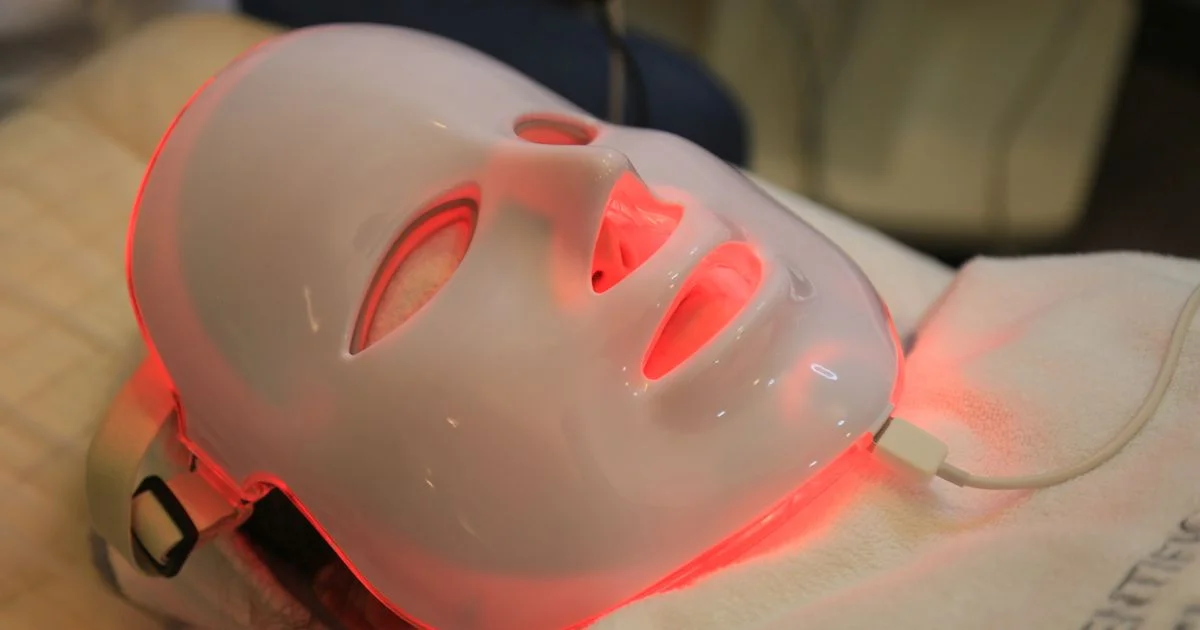
Light-based skincare sells itself on the picture: a glowing mask, a quiet few minutes, calmer skin by spring. What the picture leaves out is which weeks of your life the habit has to survive. A Theraface LED mask for acne is a different purchase depending on how your breakouts arrive, what else is already on your face at night, and how reliably you can protect the same few minutes every evening.
This is an independent editorial article. Therabody did not review or approve it.
This article describes published product and safety information and is not medical advice. Acne that scars, spreads or does not settle with over-the-counter care is worth taking to a clinician, and anyone using prescription skin medication should ask the prescriber before adding light therapy.
Use case 1: buying a Theraface LED mask for acne when breakouts come in waves
Therabody publishes the numbers that matter for this decision. The mask carries what the company describes as “648 powerful, medical-grade light sources” and lists three wavelengths: blue at “415 nm”, red at “633 nm”, and red plus infrared at “830 nm”. Treatments run “3-9 minutes”, with a “pre-programmed 9-minute treatment”, and the company frames its clinical study parameters around “1x/day use”.
That last detail is the one that decides the purchase. This is a daily-habit device, not a device you reach for in a bad week. If your acne is cyclical and you expect to use the mask only when something flares, you are buying a routine you have already decided not to follow.
The product page also carries the phrase “FDA Cleared”, and it is worth knowing exactly what that phrase is. The FDA describes a 510(k) as “a premarket submission made to FDA to demonstrate that the device to be marketed is as safe and effective, that is, substantially equivalent, to a legally marketed device.” When the agency agrees, the order “clears” the device for commercial distribution. Cleared means the device is enough like something already on the market to be sold. It is not a finding that the device will clear your skin, and it is not the same word as approved.
Three checks are worth making before the box arrives:
- Decide which wavelength you are actually buying. Blue is the one the company ties to acne-causing bacteria; red and infrared are sold for a slower, different job.
- Count the evenings you can realistically give it. A device designed around once-daily sessions is priced against daily use, not occasional use.
- Read the precautions page before you read the reviews. It is short, it is published, and it rules some people out.
You can check current options here:
Check on Amazon See on Walmart
Use case 2: what a Theraface LED mask for anti-aging session is really asking of you
The case for a Theraface LED mask for anti-aging rests on the red and infrared settings rather than the blue one, and it runs on a longer clock. Nothing about the hardware changes between the two jobs; what changes is how long you have to keep showing up before there is anything to judge.
That matters for a practical reason. An acne buyer usually has a short feedback loop, because a breakout either settles or it does not. A firmness or texture goal gives you almost nothing to look at for weeks. If you are buying for both, expect the acne side to tell you whether the habit is sticking long before the other side tells you anything at all.
The published battery figures set the ceiling on how casual you can be about charging. Therabody states battery life of “approximately 120 minutes for LED Light Mode and 60 minutes for Vibration Mode”, over a USB-C cable. At nine minutes a session, a full charge covers roughly a fortnight of daily use before the cable becomes part of the routine too.
Use case 3: reading the precautions before a Theraface LED mask for sensitive skin purchase
This is the section that should come first for anyone buying a Theraface LED mask for sensitive skin, and it is the one almost nobody reads. Therabody publishes a precautions and contraindications page, and it is specific. Among the items it names:
- A contraindication for “Skin rash, open wounds, blisters, local tissue inflammation, infection, bruises, or tumors”.
- A precaution for “Recent facial treatment, including neurotoxin, dermal filler, microneedling, laser, and chemical peel until the skin has fully healed”.
- A precaution for “Medications that cause light sensitivity”, and a contraindication for “Pregnancy/nursing” and for “Epilepsy”.
- Eye instructions: “Do not apply directly to the eyeball/eyelid”, a contraindication covering “Eye-related disorders such as e.g. retinitis pigmentosa, ocular albinism, other congenital retinal disorders”, and the note that “It’s recommended that you remove contact lenses before using the device”.
One line on that page collides directly with the most ordinary acne routine there is. The company states: “If taking or using any retinol or/ sun sensitive medications or /products or benzoyl peroxide do not use infrared light.” Benzoyl peroxide is on the shelf of a great many people shopping for an acne device, and retinol is on the shelf of almost everyone shopping for the anti-aging one. The maker’s own guidance is to keep the infrared setting out of that combination.
The page closes with the sentence that tells you what to do with all of it: “Consult with a medical professional if you currently have or suspect you may have any of the following conditions or if you have any questions.”

Use case 4: a Theraface LED mask for daily use, and the minutes that decide it
Treat a Theraface LED mask for daily use as a scheduling question rather than a skincare question. Nine minutes is short enough to sound trivial and long enough that it has to displace something. The evenings it survives are the ones where it is attached to a thing you already do without thinking: after brushing your teeth, before the last screen of the night, while a kettle boils.
A few practical habits travel well across situations:
- Charge it on the same day each week rather than when it dies, so a flat battery never becomes the reason a streak ends.
- Put the mask where the routine happens, not where the gadgets live. A device in a drawer in another room is a device you use twice.
- Keep your actives and your sessions on separate evenings if the precautions page puts them in conflict, rather than quietly doing both.
- Give it one unbroken stretch of weeks before you judge it, and photograph your skin at the start so you are comparing against something real.
The warranty is worth knowing before the first session rather than after a fault. Therabody lists a “1-year limited warranty” on the mask.
Side-by-side by situation
| Your situation | What it actually needs | What to settle before buying |
|---|---|---|
| Breakouts that arrive in waves | A habit that runs between flares, not during them | Your willingness to use it on the clear weeks too |
| Already using benzoyl peroxide or retinol | A plan for the infrared contraindication | Which nights are device nights and which are actives nights |
| Reactive or recently treated skin | The precautions page read line by line first | Whether a recent procedure has fully healed |
| Contact lenses or an eye condition | The eye instructions, followed exactly | Lens removal, and a clinician check if a condition is listed |
| A firmness goal rather than a breakout goal | Months of consistency and a way to measure it | A start photograph and a date to review it |
| A crowded evening routine | An anchor habit the session attaches to | Which nine minutes you are giving up |
Related Articles
- Sonic Facial Cleansing Brush Review: What the Evidence Says
- Facial Toning Device Guide: What Works and What Does Not
- Best Hair Growth Laser Device: An Honest Buying Guide
Frequently Asked Questions
These come up most often from readers deciding between a device like this one and simply spending the money on products or a clinic visit instead.
Does FDA Cleared mean the mask is proven to clear acne?
No. The FDA describes the 510(k) route as a submission showing a device is “substantially equivalent, to a legally marketed device”, after which the order “clears” it for sale. That is a statement about how the device compares to things already on the market, not a promise about your skin.
Can I use it on the same night as my acne treatment?
Therabody’s own precautions page says that if you are using “any retinol or/ sun sensitive medications or /products or benzoyl peroxide do not use infrared light.” If those are part of your routine, separate the nights or ask the prescriber how to sequence them.
How long does a session take, and how often?
The company lists treatments of “3-9 minutes” including a “pre-programmed 9-minute treatment”, and describes its clinical study parameters around “1x/day use”. Plan the purchase around daily sessions rather than occasional ones.
Do I need eye protection if the mask has eye openings?
Follow the instructions that ship with the device. Therabody says not to apply light “directly to the eyeball/eyelid”, recommends removing contact lenses first, and lists several congenital retinal disorders as contraindications.
Conclusion
The hardware question on this device is settled by the maker’s own published figures, and the interesting question is what your evenings and your current routine can carry. Read the precautions page before the reviews, decide which wavelength you are buying, and be honest about the nights you will actually give it.


1 Comment
Comments are closed.