

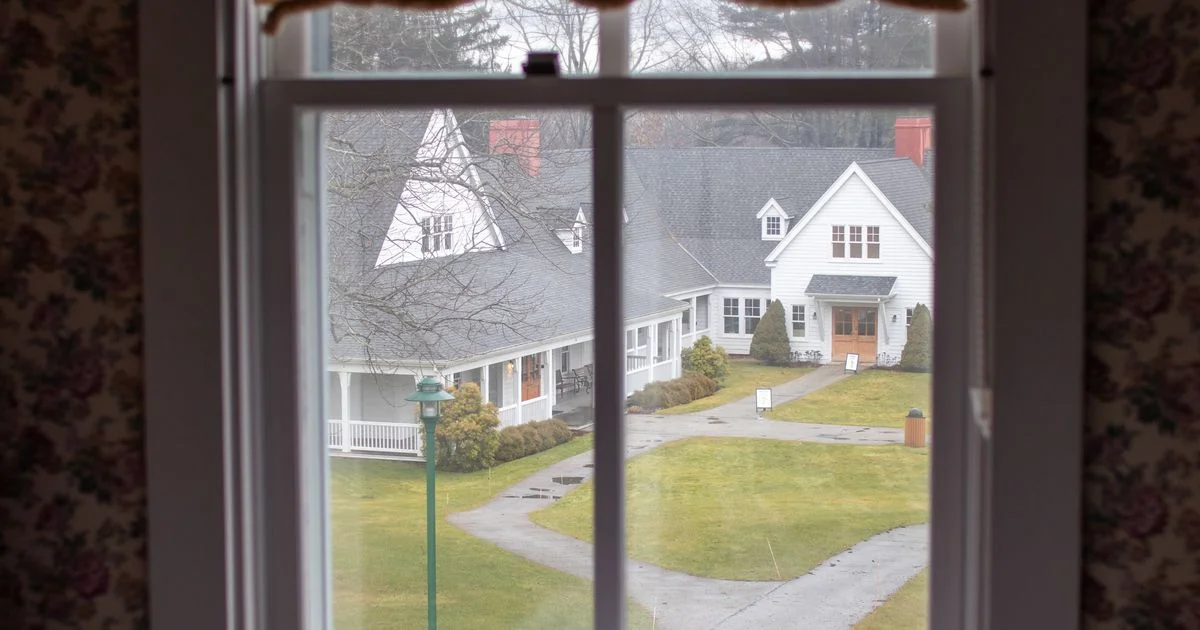
A window in a bedroom is not only a window. Building codes count it as a way out of a burning house, and that single reclassification decides more about smart blinds for large windows than any feature on the box. Before motor noise, app support or fabric color, the question is whether the covering still lets a person get through the opening in the dark.
Scope and safety: emergency escape and rescue openings are governed by your local building code, and the figures below come from the International Residential Code as published by a city building department. Energy figures come from the U.S. Department of Energy. This is general information. Your own jurisdiction’s adopted code, and your own building department, govern your house.
Use case 1: what smart blinds for large windows have to leave alone
Section R310 of the International Residential Code is short and it is not vague. “Basements, habitable attics and every sleeping room shall have not less than one operable emergency escape and rescue opening.” That opening has a floor area: “not less than 5.7 square feet,” relaxed to 5 square feet for an opening at grade. It has a shape: the net clear height “shall be not less than 24 inches” and the net clear width “shall be not less than 20 inches.” And where a window serves as that opening, “it shall have a sill height of not more than 44 inches above the floor.”
Then comes the sentence that matters to anyone hanging something over it. Emergency escape and rescue openings “shall be operational from the inside of the room without the uses of keys, tools or special knowledge.”
Read that against a motorized shade. A shade you raise by pulling it is operational. A shade you raise by finding a phone, opening an app and hoping the hub answers is a harder question, and nobody wants to test it at three in the morning. The rule is simple: on any opening that serves as an escape, the covering has to clear by hand, fast, for someone who has never read the manual.
- Measure the sill height from the finished floor before you shop. If it is close to 44 inches, the window is doing code work and the covering has to respect that.
- Check that the shade clears the full opening when raised, not just most of it. A header box that hangs into the top of the frame eats the net clear height the code is counting.
- Confirm there is a manual release or a pull that works with no power, no phone and no hub.
- Side channels that hold fabric tight to the frame look excellent and turn a one-second exit into a puzzle.
- If the room is a basement or a finished attic, R310 applies there too, and people forget those rooms first.
Use case 2: smart blinds for bedrooms and the 44-inch line
The case for smart blinds for bedrooms is where the escape rule and the comfort argument meet, and they do not always agree. The reason to automate a bedroom covering is the morning: a shade that opens on a schedule so the room gets light before the alarm does. The reason to be careful is the night: the same shade, closed, is now the thing between a sleeping person and the only opening in the room.
Both can be true at once, and the resolution is mechanical rather than clever. Choose a covering that fails open by hand. Keep the header shallow. Leave the bottom rail light enough to lift. If a child sleeps in the room, walk them through raising it once, without the app, the way you would walk them through a smoke alarm.
There is a quieter point about big bedroom windows. A wide opening is often covered by two shades on one header, which means two motors and two batteries to re-pair after a firmware update, and two things to clear by hand on the night you need the room open.
Use case 3: smart blinds for living rooms, where the window is the wall
In a living room the escape rule usually does not apply, and the problem changes shape entirely. Choosing smart blinds for living rooms is a glare and heat question, on a window that is often the largest single surface in the house and the one you cannot shade from outside.
Three things decide whether automation earns its place here:
- Does the sun move across the room during hours you are in it? A west-facing living room in summer is the strongest case for a covering that closes on a schedule, because the hour it needs to close is the hour nobody is home to close it.
- Is the window one span or several? A run of three or four panels wants a single command more than a single small window ever will. This is the case where a hub stops being a gadget and starts being the reason the system works.
- What happens when the internet is out? Living room coverings get used daily, so the fallback is not a safety question, it is a livability one. A wall control or a remote that works locally is worth more than a second voice assistant.
Fabric decides more here than the motor does. A sheer keeps the view and does very little about heat; a blackout does the opposite and turns the room into a box at two in the afternoon. The dull middle option is the one nobody markets.

Use case 4: smart blinds for energy saving and what the label actually certifies
The pitch for smart blinds for energy saving is the claim with the most numbers attached to it, and the one where it pays to read whose numbers they are. The Department of Energy notes that “nearly 80% of U.S. homes have inefficient single or double-pane windows,” which is the reason the category exists at all. On what a covering does about that, the DOE’s own fact sheet on cellular shades says that “installing window attachments can save 15% of a household’s annual HVAC,” and that cellular shades “saved up to 20% on heating energy and up to 15% on total energy from heating and cooling compared to scenario without any shades.”
Two qualifications belong next to those figures, and the DOE supplies both. The comparison is against a window with no shade at all, not against the covering already hanging there. And the mechanism is physical: cellular shades “trap air within each cell, as well as between the shade and the window,” which is how they “reduce nighttime heat loss through windows, minimize cold drafts near windows, and reduce unwanted solar heat gain.” None of that has anything to do with a motor. A hand-pulled cellular shade traps exactly the same air.
What automation adds to the energy case is narrow and real: it closes the shade at the hour that matters when the house is empty. That is worth something in a west-facing room in August. It is worth very little in a room somebody is sitting in.
There is a document that will tell you about the fabric rather than the marketing. The DOE points readers to the Attachments Energy Rating Council: “look for the AERC energy improvement label on certified products,” and “search AERC’s qualified product list to check if your product is certified,” because “all products with an AERC rating have been measured according to stringent standards.” AERC covers window attachments broadly, “products, including blinds, cellular shades, roller shades, storm windows, solar screens and pleated shades.”
Note carefully what that rating is about. It measures the attachment’s energy performance. It says nothing about the motor, the battery, the hub, the app or how long the company will keep the app working. A certified shade with a discontinued controller is still a certified shade, and it is also a hand-pulled shade from that day forward.
Use case 5: renting, and the two things you cannot change
Renters get the hardest version of this. The window is not yours, the covering that came with it is usually staying, and drilling a header for smart blinds for large windows is the kind of change that shows up on a move-out inspection.
Two constraints do not bend. The first is the escape rule, which applies to the room regardless of who owns it, so a temporary covering over a bedroom window has the same obligation as a permanent one. The second is power. A battery-driven shade on a large window works harder than one on a small window and will want charging more often, and there is rarely an outlet near the top of a tall frame.
The honest advice for a rental is to solve the heat before the automation. A covering that fits the opening and gets closed on hot afternoons does most of the work the DOE figures describe. The schedule is what you add later, or skip.
Side-by-side by situation
| Your situation | What it actually needs | What to ignore |
|---|---|---|
| Bedroom, basement or finished attic | A covering that clears the full opening by hand, with no app and no power | Anything that makes the escape path depend on a network |
| Wide living room span, sun in the afternoon | One command across several panels, plus a local control that works offline | A second voice assistant |
| Heating bill is the complaint | A cellular fabric that fits the opening; check the AERC certified product list | Savings claims measured against a bare window |
| Renting, cannot drill | Fit and coverage first; battery access you can actually reach | Permanent headers and hardwired motors |
| Kids in the room | A pull anyone can find in the dark, demonstrated once out loud | Scenes and schedules as a substitute for a manual release |
Related Articles
- Smart Light Switch for the Living Room: Renting, Voice, or Savings
- Best Smart Thermostat for Energy Savings: Rental or Old House
- Humidifier for Bedrooms: Dry Heat, a Nursery, or an Old House
Frequently Asked Questions
These are the questions that come up once the escape rule has been taken seriously and the room has been measured. They are about what the category can and cannot do, rather than about which product to buy.
Does a motorized shade break the emergency escape rule?
Not by itself. The code requires the opening to be “operational from the inside of the room without the uses of keys, tools or special knowledge.” A covering that can be raised by hand, quickly, satisfies that. A covering whose only release depends on a phone, an account or a working hub is the arrangement to avoid. Test it with the power off before you decide you are happy with it.
How much will automated coverings cut my energy bill?
The DOE’s figure of up to 20% on heating energy is for cellular shades measured against a window with no shade at all, and the saving comes from the fabric rather than the motor. If a covering is already there and already gets closed, automating it changes when it closes, not how well it insulates. The gain is real in rooms nobody is in during the hours that matter.
Is one wide shade better than two on a large window?
One is simpler to live with, but very wide fabric gets heavy and slow, which is why many openings are split. Ask what the split costs in ownership: two motors, two batteries and two devices to reconnect. If the window is an escape opening, ask whether both panels clear by hand.
What should I check before buying anything at all?
Measure the sill height and the net clear opening of any bedroom, basement or attic window in the plan. Look up whether the covering you like appears on the AERC certified product list if energy is the reason you are buying. Then ask the seller one plain question: with no power and no phone, how does this go up?
Conclusion
The interesting constraint on this category is not a specification, it is a paragraph in a building code that was written long before anything in the house had an app. A covering that respects the opening, fits the window properly and can be cleared by hand is the whole of the safe answer; the schedule is what you add once that is settled. Measure the sill, read the label, and keep the exit an exit.


