

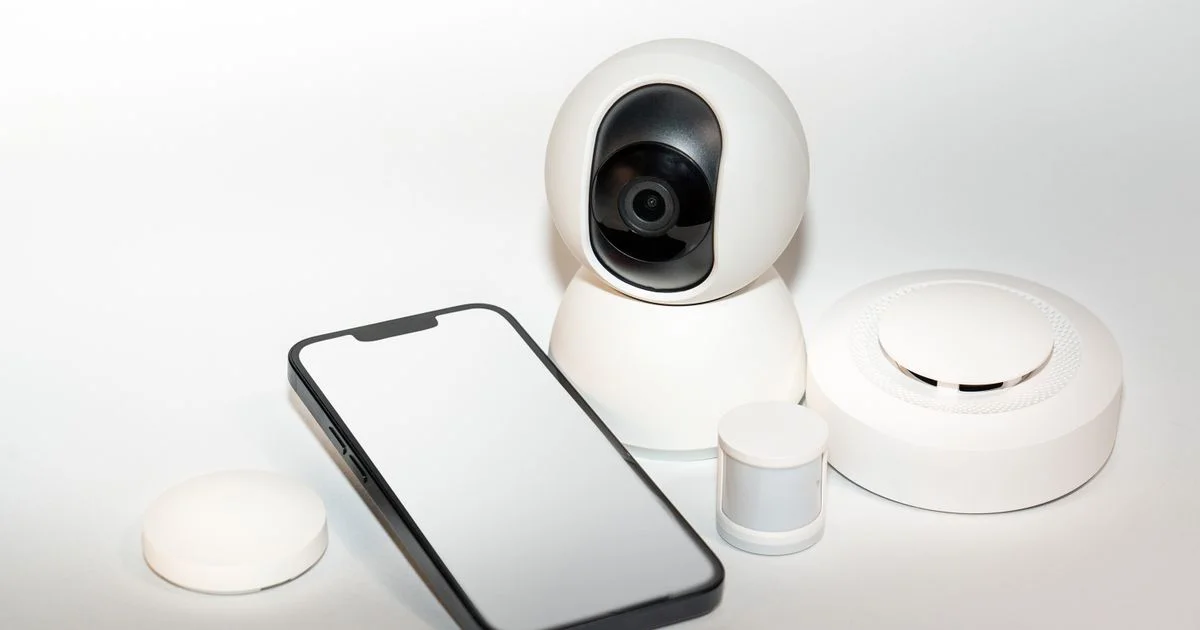
In a rented apartment the first thing that limits a security system is not the floor plan. It is a document in a kitchen drawer. The best home security system for apartments is usually not the one with the longest sensor list, but the one you can put up without a drill, take down in an afternoon, and point somewhere it is allowed to look.
This is general information and not legal advice. Landlord and tenant rules, and the rules on recording sound, differ from state to state. Your own lease governs your unit, so read it before you mount anything.
Use case 1: Renting, where the best home security system for apartments has to be reversible
Renters buy security equipment with a condition attached that homeowners never think about: everything has to come off again. Two clauses in an ordinary lease decide most of the shopping. One is the alterations clause, which usually covers holes in walls and doors. The other is the fixtures clause, which can quietly say that anything permanently attached to the unit stops being yours when you leave.
The second clause matters more than people expect. A doorbell camera screwed into a door frame is arguably attached; the same camera sitting on a shelf inside the unit, watching the door, is plainly not. The cheapest way to settle it is to ask in writing before you buy, and keep the reply.
The other document worth reading is your state’s rule on landlord entry, because a camera inside your own front door will record every lawful visit. California is a useful worked example rather than a national rule: Civil Code section 1954 lets a landlord enter to make “necessary or agreed repairs, decorations, alterations or improvements, supply necessary or agreed services”, to show the unit, in an emergency, after abandonment, or under a court order. Outside an emergency, the landlord “shall give the tenant reasonable notice in writing of his or her intent to enter and enter only during normal business hours”, and “Twenty-four hours shall be presumed to be reasonable notice in absence of evidence to the contrary”. Look up the equivalent section where you live before you decide what your camera should be recording and keeping.
What a home security system for renters can be attached to
A home security system for renters is built around adhesives, gravity and batteries rather than screws. The parts that survive a move-out inspection tend to be these:
- Door and window contacts on adhesive pads, with the original paint tested in a corner first
- A hub or base station that sits on a shelf and plugs into a standard outlet
- Battery cameras placed on furniture rather than mounted on walls
- A motion sensor propped on a bookcase at the height of the route through the apartment
- A plug-in siren, which needs no mounting at all and is the part burglars react to
Keep every original screw, plate and door chain you remove in a labeled bag. The deposit dispute people actually lose is not about the hole, it is about the missing part.
You can check current options here:
Check on Amazon See on Walmart
Use case 2: A home security system for small homes with one real entrance
A studio, a one-bedroom or a small condo has a geometry that works in your favor. There is one door people actually use, and everything of value sits within about twenty feet of it. A home security system for small homes can therefore be smaller than the box art suggests, and the money is better spent on getting four things right than on buying a tenth sensor.
- Walk the route from your front door to the drawer where your passport and laptop live. That short line is what a single motion sensor should cover.
- Put the siren where a neighbor hears it, not where you hear it. In an apartment building the person most likely to react is the one across the hall.
- Set up a night mode that arms the door and leaves the interior sensors off, so getting a glass of water at 2 a.m. does not become an event.
- Unplug your router for five minutes and watch what the system does. That is the failure you will actually experience, and you want to know the answer before it happens.
Ground-floor and courtyard-facing windows are the exception to the “one door” rule, and they deserve contacts. Upper-floor windows with no balcony and no fire escape below them rarely do.
Use case 3: Shared walls, shared hallways, and what your camera records
The moment a camera points at a corridor, it stops being only about your apartment. Two neighbors arguing outside a door are having a private conversation in a space they share with you, and many cameras record sound by default.
Federal law sets the floor. Under 18 U.S.C. 2511, it is an offense to intentionally intercept “any wire, oral, or electronic communication”, with an exception where a person “is a party to the communication or where one of the parties to the communication has given prior consent to such interception”. That is one-party consent, and a hallway conversation you are not part of does not meet it. A number of states go further and require every party to agree. The practical rule that survives both: point cameras at your own door and your own threshold, and turn the microphone off on anything that can see past it.
Two more things are specific to buildings rather than houses. A camera fixed to a corridor wall is usually on common property, which is the landlord’s or the association’s to control, not yours. And a motion sensor placed on a shared wall will be triggered by the life on the other side of it, which is the quickest way to stop trusting your own alerts.

Use case 4: A home security system for elderly parents in another city
Setting up equipment for someone else changes the question from “what protects this apartment” to “who is going to answer the phone”. A home security system for elderly parents that sends every alert to an adult child four states away, and none to anyone nearby, is a notification service rather than a security system. Put a local name second on the contact list before you put a camera in the hallway.
Arming should be easier than disarming is punishing. If a keypad code is hard to remember at 3 a.m., a system that calls the police on the third wrong entry is not protecting anyone. Look for a simple physical control, a long entry delay, and an alert that reaches you before it reaches a dispatcher.
The doorstep is the other risk, and it is the one federal rules actually cover. The Federal Trade Commission’s Cooling-Off Rule, at 16 CFR Part 429, covers sales solicited in person at a buyer’s residence from $25 upward, and elsewhere from $130 upward. It gives the buyer the right to “CANCEL this transaction, without any Penalty or Obligation, within THREE BUSINESS DAYS from the above date”, and it requires the seller to hand over a completed contract “in the same language … as that principally used in the oral sales presentation”, a written notice of cancellation in duplicate, and an oral explanation of the right at the time of sale.
The FTC’s own advice on shopping for these systems is blunt about the sales tactics that go with them. It warns that scammers “might talk about a made-up rash of supposed burglaries in your neighborhood” and may falsely “say – or imply – they’re from your existing security company”, and its instruction is simply: “Don’t let anyone pressure their way into your home. It’s not rude to tell a salesperson you’re not interested.” If a salesperson refuses to leave, the FTC says to call the police. Before anyone signs, get these in writing:
- The installation price and what it includes
- The monitoring fee and how often it is billed
- The length of the contract period
- Any penalty for ending it early
- The cancellation forms themselves, in the buyer’s hands, on the day
Side-by-side by situation
| Your situation | What it actually needs | What to skip |
|---|---|---|
| Rented apartment, no drilling allowed | Adhesive contacts, a shelf-standing hub, battery cameras, written landlord permission | Anything screwed into a frame, doorbell units wired to existing chimes |
| Studio or one-bedroom | One door contact, one well-placed motion sensor, a loud siren, a tested night mode | Window contacts above the ground floor, extra sensors for rooms you can see from the door |
| Shared hallway or corridor entrance | Cameras aimed at your own threshold, microphones switched off, building permission for anything on common walls | Corridor-facing audio recording, sensors mounted on a shared wall |
| Parent living alone in another city | A local second contact, a long entry delay, simple arming, alerts that reach family first | Complex codes, camera-first setups, anything bought at the door on the day |
| Frequent travel, empty for weeks | Cellular or battery backup, a siren neighbors can hear, someone with a key | Systems that depend entirely on home Wi-Fi staying up |
Related Articles
- Best Smart Camera for Google Home for the Front Door, Nursery, or Pets
- Best Smart Doorbell Camera Buying Guide for 2026
- Best Smart Garage Door Opener: A Complete Buyer’s Guide
Frequently Asked Questions
These are the questions that come up once the shopping is done and the equipment is in the hallway, waiting to go somewhere.
Can I install a security system in a rental without losing my deposit?
Usually, if nothing is screwed in. Adhesive mounts, shelf-standing hubs and plug-in sirens leave no holes. Test any adhesive on a hidden corner of the paint first, keep the original hardware you remove, and get written permission for anything that touches a door, a frame or a common wall.
Should a camera pointing at a hallway record sound?
It is safer to turn the microphone off. Federal law allows recording where one party to the conversation consents, and a conversation you are not part of does not qualify. Several states require all parties to agree. Video of your own threshold raises none of that.
Is a security system the same thing as a medical alert for an older parent?
No, and they answer different emergencies. A security system reacts to the building being entered. A medical alert is worn and summons help for the person. Buying one and expecting the other is a common and expensive mistake, and a household that needs both usually needs them from separate products.
Does a small apartment really need more than a door sensor and a siren?
Often not. One contact on the door that is used, one motion sensor covering the route to where valuables sit, and a siren loud enough for a neighbor cover the realistic scenario in a small unit. Add cameras when you want to identify someone, not to detect them.
Conclusion
Apartment security is decided by three documents and one piece of geometry: the lease, the state entry rule, the contract you sign, and the short line between your front door and the things worth taking. Get those right and a modest kit outperforms an expensive one badly placed.


