

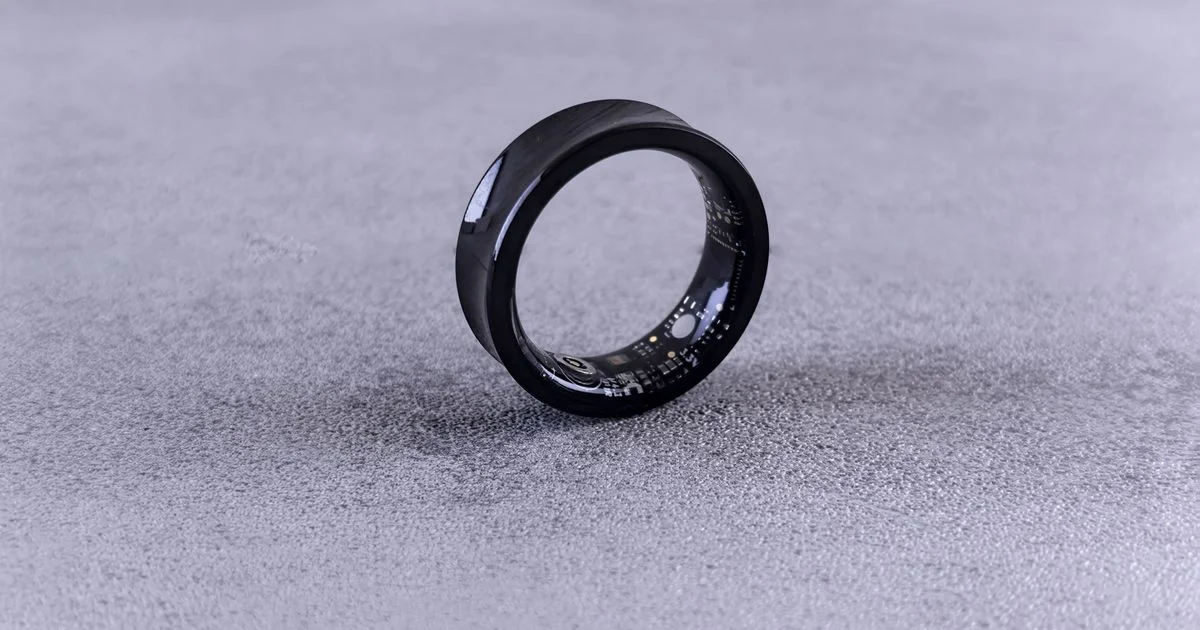
Some people want a health device. Other people want the health device to be invisible, which is a different requirement and it narrows the shelf fast. An invisible health tracker for daily wear is bought by the person who cannot have a screen on their wrist at work, cannot sleep in a watch, or simply does not want a gadget visible in every photograph for the next three years. Every trade-off in the category follows from that one decision.
Scope note: this article is about which situations suit a screenless wearable, not about diagnosing or treating anything. These devices produce estimates rather than measurements, and a symptom you can feel belongs with a clinician rather than with a better tracker.
Use case 1: an invisible health tracker for daily wear when a watch is in the way
The honest starting point is what disappears along with the screen. There is nowhere to glance. Every number the device produces reaches you through a phone, which means the act of checking is no longer a wrist flick in a meeting but taking a phone out and unlocking it. For some buyers that is the whole appeal, because the data stops interrupting the day and becomes something reviewed once in the morning. For others it is the reason they go back to a watch within a month.
The second thing that disappears is adjustability. A band can be tightened; a ring cannot be resized. Fingers change size through the day, with temperature, with exercise and with the seasons, and a ring that is right at ten in the morning can be loose at six in the evening or tight after a hot shower. This is why sizing kits exist, and why a seller that ships one before the device is a seller doing you a favor. It is also why the finger you choose matters, and why most guidance points at the same one or two fingers rather than leaving it open.
Third, charging happens off the body. A screenless device that has to come off to charge creates a gap in the record, and the sensible habit is to attach that gap to a fixed part of your day rather than to whenever the battery complains. People who charge while showering or while cooking dinner keep a complete overnight record; people who charge overnight do not.
You can check current options here:
Check on Amazon See on Walmart
Use case 2: an invisible health tracker for sleep tracking, and the night it has to survive
Overnight is the situation where a screenless device has a genuine physical advantage, and it is the reason most of them are bought. A wrist device presses into a pillow, catches on bedding and announces itself with a lit screen every time you move. The case for an invisible health tracker for sleep tracking is mostly that you forget it is there, and a device you forget is a device that is still on you at four in the morning.
Three situations sharpen the decision:
- A shared bed. A screen that lights up when a sleeper turns over wakes two people. A device with no screen wakes nobody, which is a real argument that no specification sheet lists.
- Shift work. If your main sleep happens in daylight, you need a device that records whenever you sleep rather than one that assumes night, and you need the review to happen at a fixed point in your own day rather than at a fixed clock time.
- Travel across time zones. The useful output on the road is the pattern across a week, not any single night, because the first two nights in a new zone are going to look bad regardless of what you bought.
What none of these devices does is diagnose. They infer sleep from movement and pulse rather than measuring it the way a clinic does, and a nightly score is a composite the maker invented rather than a reading. Treat a run of unusual nights as a reason to talk to somebody, not as a result.

Use case 3: an invisible health tracker for discreet use, and the claim to check first
Discretion is a legitimate reason to buy, and it is also the situation where marketing gets loudest. A device sold on invisible health tracker for discreet use grounds tends to list a long menu of things it senses, and the menu is where the buying decision actually gets made or lost.
The Food and Drug Administration published a safety communication on 21 February 2024 that is worth reading before any purchase in this category. It warns “consumers, patients, caregivers, and health care providers of risks related to using smartwatches or smart rings that claim to measure blood glucose levels,” and it states the position flatly: “The FDA has not authorized, cleared, or approved any smartwatch or smart ring that is intended to measure or estimate blood glucose values on its own.” Its advice to buyers is one sentence long. “Do not buy or use smartwatches or smart rings that claim to measure blood glucose levels.”
The agency explains why the stakes are not theoretical. “For people with diabetes, inaccurate blood glucose measurements can lead to errors in diabetes management, including taking the wrong dose of insulin, sulfonylureas, or other medications that can rapidly lower blood glucose.” It also draws the line that a product page will blur: these are “different than smartwatch applications that display data from FDA-authorized blood glucose measuring devices that pierce the skin, like continuous glucose monitoring devices (CGMs).” An app on your wrist showing a reading from an authorized sensor is one thing. A ring claiming to produce that reading by itself is another.
The wider point generalizes past glucose. The FDA sorts health software into functions that “are not medical devices,” functions that are devices “but for which the FDA intends to exercise enforcement discretion,” and functions that “are the focus of FDA oversight,” and it says openly that it “takes a risk-based approach that focuses on the subset of software functions that meet the definition of device.” Most of what a screenless tracker does sits in the first two buckets. If a specific feature has been cleared, the maker will say so in writing and name the clearance. If a feature is only ever described in marketing language, that silence is the answer.
Use case 4: an invisible health tracker for professionals who cannot wear a watch to work
This is the group the category was made for, and it is larger than it looks. The case for an invisible health tracker for professionals is rarely about data quality; it is about a dress code, a hygiene rule or a machine.
Four working situations come up repeatedly, in roughly this order of how often they decide the purchase:
- Client-facing and formal roles, where visible technology reads as inattention.
- Clinical and food-handling work, where what is allowed on the hands and wrists is set by a written policy rather than by preference.
- Hands-on trades and lab work, where anything on a finger is a snag risk around rotating equipment.
- Performance, teaching, courtroom and interview settings, where a lit screen is simply rude.
The practical advice is the same in all four: the policy that governs your hands is a document, and somebody has already written it. Before buying, read your own workplace’s rules on jewelry, gloves and hand hygiene, and check whether a ring is permitted at all. A device that lives in your locker is worse than no device, and that outcome is decided by a page you can read in five minutes rather than by any specification.
If none of those constraints applies to you, the honest answer is that a visible device with a screen probably suits you better, and our guide to picking a smartwatch for the gym, a kid’s wrist, or the pool covers that side of the decision.
Side-by-side by situation
| Your situation | What it needs | The trade-off to accept |
| Wear it every day, all day | Correct sizing, a charging habit tied to a routine | No glanceable number without your phone |
| Shared bed, light sleeper beside you | No screen, nothing that lights up on movement | Estimates rather than clinical measurement |
| Night shift or rotating hours | Recording that does not assume night, reviewed at a fixed point in your day | Weekly patterns are useful; single nights are not |
| Formal or client-facing work | Something that reads as jewelry, not as a gadget | Checking data is a deliberate act |
| Clinical, food or hands-on work | A check against your workplace’s own hand and hygiene policy first | The policy may rule out a ring entirely |
| Managing a diagnosed condition | A device your clinician recognizes, not a wellness claim | No consumer ring is an authorized glucose meter |
Related Articles
- Best Smart Scale for Body Fat: What the Numbers Really Mean
- Best Heart Rate Monitor Chest Strap: Accuracy and Buying Guide
- Best Cooling Mattress Pad for Hot Sleepers: No AC or Shared Bed
Frequently Asked Questions
Four questions settle most of this category, and one of them is about a claim you should refuse.
Can a smart ring measure my blood sugar?
No. The FDA’s safety communication of 21 February 2024 states that it has not authorized, cleared or approved any smartwatch or smart ring intended to measure or estimate blood glucose on its own, and tells consumers not to buy or use devices that claim to. A device that displays readings sent from an authorized continuous glucose monitor is a different thing and the agency says so explicitly.
Which finger should it go on?
Follow the sizing instructions that come with the specific device rather than a general rule, because makers design around a particular finger and the optical path depends on it. Size with the kit if one is supplied, size at the time of day you will wear it most, and allow for the fact that fingers swell in heat and after exercise.
Is it better than the phone already in my pocket?
For step counts and rough activity, a phone does most of the job for nothing. The thing a screenless wearable adds is a continuous overnight record, because the phone is on the nightstand and the tracker is on you. If nothing about your nights is a question you want answered, that difference may not be worth buying.
What should I do with a bad score?
Look at the week rather than the morning. These scores are composites built from estimates, and one poor night usually means you moved a lot in bed. A pattern that stays unusual, or any score that arrives alongside symptoms you can actually feel, is a reason to speak to a clinician rather than to keep reopening the app.
Conclusion
Pick the device that fits the situation that made you look in the first place: the bed, the dress code, the policy on your hands. Size it properly, tie the charge to a habit, read the week instead of the night, and refuse any product that claims to measure something the FDA says it has never authorized anyone to measure that way.


1 Comment
Comments are closed.