

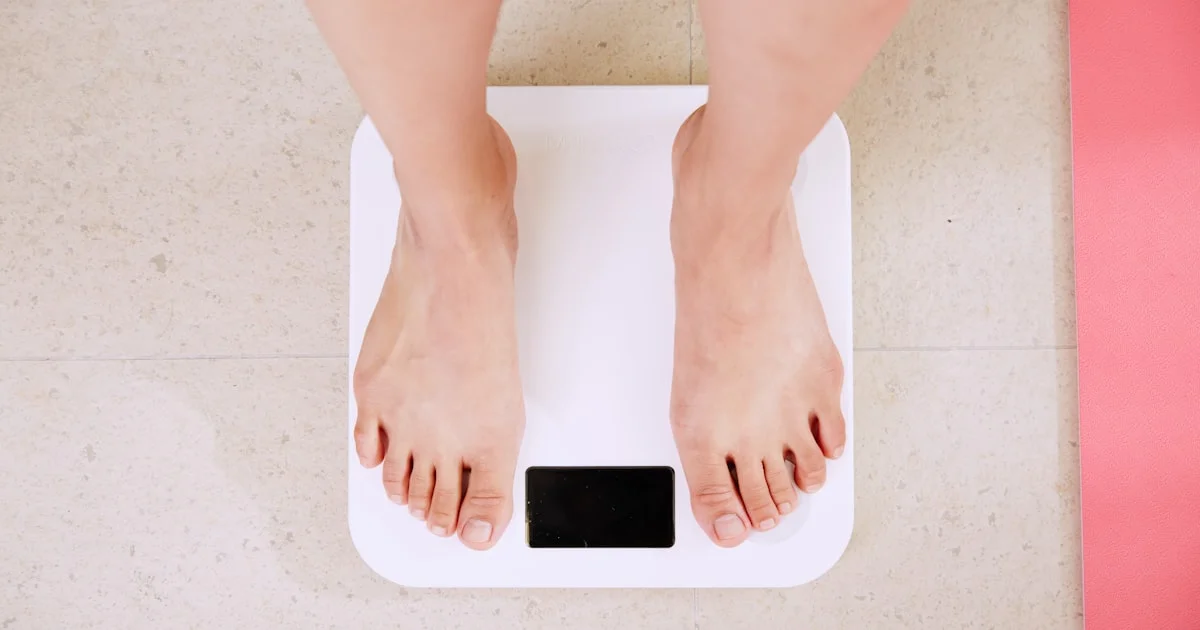
You step on, and eight numbers appear: body fat, muscle mass, water, visceral fat, bone mass, metabolic age, and a couple you have never heard of. It feels like a lab report. The best smart scale for body fat is genuinely useful, but only once you understand that those numbers are estimates from a prediction model, not measurements.
Key Takeaways
- Trends beat absolute numbers. Even in a lab, these devices carry an error margin of roughly 10% to 12%.
- Hand-and-foot models see more of you. Foot-only scales estimate your upper body rather than measuring it.
- Weigh at the same time every day. Hydration changes conductivity, so morning readings are the only comparable ones.
- Wi-Fi syncing beats Bluetooth if you want data logged without opening an app first.
- Skip it if you have a pacemaker. Manufacturers say so directly, and pregnancy is untested territory.
How the Best Smart Scale for Body Fat Actually Works
The short answer: the best smart scale for body fat passes a tiny electrical current through your body and times how long it takes, then feeds that result into a formula alongside your height, age and sex. The technique is called bioelectrical impedance analysis, or BIA.
It works because fat and muscle conduct electricity differently. Muscle holds a lot of water and conducts well; fat holds little and resists. Measure the resistance, and you can estimate the ratio between them.
The word estimate is doing real work in that sentence. Nothing in your body is being directly observed. As exercise physiologist Jordan Moon, PhD told Yahoo Health’s testing team, even in laboratory settings body composition scales carry an error of plus or minus 10% to 12%. A 2021 study cited in the same testing found errors averaging five to ten pounds when estimating fat mass and fat-free mass.
What That Means in Practice
If your scale says 24% body fat, the honest reading is “probably somewhere in the twenties.” What the scale is good at is consistency: it applies the same flawed formula every morning, so if the number drifts from 24% to 22% over two months under identical conditions, something real changed. Chase the direction of the line, not any single value.
Bluetooth Smart Scale Accurate Enough? Electrodes Decide
Whether a bluetooth smart scale accurate enough for your purposes exists depends mostly on how many electrodes it has and where they sit.
A basic scale has four foot electrodes. The current enters one foot, travels up one leg, crosses your pelvis, and returns down the other — which means it barely touches your torso and never reaches your arms. Everything above the waist is inferred by the formula rather than measured.
An eight-electrode design adds a handlebar or grips, so current also travels hand to hand and hand to foot. That covers the upper body properly and enables segmental readings, meaning separate figures for each arm and leg. Yahoo Health’s testers named the Renpho Smart Scale for Body Weight their overall pick partly for this reason — eight electrodes, handlebars, a color display and voice guidance, tracking more than 50 metrics with a 400-pound capacity. Their dedicated body-fat pick, the Runstar Smart Scale, also uses handheld electrodes and reports left and right arms and legs separately.
Worth noting honestly: the same testers found some handlebar models performed comparably to foot-only versions. More electrodes give you more data points, not guaranteed accuracy.

Bare Feet, Every Time
Socks block the current completely. A scale that shows weight but no body composition is usually telling you it could not complete the circuit, and dry, calloused feet cause the same failure.
Body Composition Scale Review: What Separates the Tiers
Read any serious body composition scale review and the same divisions show up between budget, mid-range and premium models.
At the low end you get weight plus a basic body-fat estimate over Bluetooth, and the scale needs your phone nearby with the app open to record anything. Tom’s Guide tested the Wyze Scale X at $39.98, handling 400 pounds and eight profiles over Bluetooth only. The Renpho Smart Body Fat Scale sits near $32.99 with 13 composition indexes and unlimited profiles, though testers flagged that it tracks in 0.2-pound increments and rounds up, blunting week-to-week comparisons.
The middle tier adds Wi-Fi, so readings upload the moment you step off. Tom’s Guide put the Withings Body Smart around $109 to $130 with Bluetooth and Wi-Fi, eight profiles, a 397-pound capacity, 0.1-pound increments and visceral fat, hydration and muscle mass readings. Premium models add clinical-adjacent measurements: the Withings Body Scan 2 runs $599 with an optional $99 annual subscription and around 60 biomarkers via a retractable handle.
| Tier | Best for | Trade-off |
|---|---|---|
| Bluetooth, foot-only | Someone who mainly wants weight logged automatically | Upper body is inferred; app must be open to sync |
| Wi-Fi, foot-only | Households wanting hands-off daily tracking | Still four electrodes, so the same blind spot |
| Eight-electrode with handles | Anyone who cares about the muscle number | Bulkier, pricier, and still an estimate |
| Premium multi-biomarker | People tracking health metrics beyond composition | Costs several times a good mid-range scale |
Smart Scale App Tracking and the Household Problem
The smart scale app tracking layer is where a scale becomes useful or becomes clutter, and it is the part people research least.
Two questions decide it. Does the app export to whatever you already use — Apple Health, Fitbit, Google Fit, MyFitnessPal or Health Connect? And how many user profiles does it support, with reliable automatic recognition? Renpho allows unlimited profiles, Runstar handles up to 24, and both Withings and Wyze models tested by Tom’s Guide support eight.
Automatic recognition matters more than the profile count. A scale identifies users mostly by weight, so two people within a few pounds of each other will get their readings mixed up, quietly, for weeks. If that describes your household, look for a model that asks you to confirm on ambiguous readings rather than guessing.
Getting Comparable Numbers
- Weigh first thing in the morning, after using the bathroom and before eating or drinking.
- Stand on bare feet on a hard, level floor — never carpet, which throws off the load cells.
- Skip the reading after a hard workout or a salty meal; both distort your hydration and the estimate with it.
- Wait a few seconds after the weight appears so the composition scan completes before you step off.
- Compare weekly averages, not single days, which is the only way the trend becomes visible.
- Leave the scale in one spot so the surface underneath never changes.
Who Should Not Use One
This part is usually buried in the manual. Withings states plainly that you should not use its Body Comp scale if you wear a pacemaker or another internal medical device, because the scale works by sending electrical signals through the body. Owners who already have one can keep using it with body composition measurements switched off in the app, leaving weight only.
Withings also notes that the device has not been tested or validated for use during pregnancy, and advises disabling impedance-based measurements as a precaution. Metal implants, stents and titanium prosthetics — particularly in the lower limbs — can produce inaccurate readings, and the company recommends checking with a doctor first.
None of this makes the scales dangerous for the general population. It does mean the body-fat feature is optional for a meaningful number of households, and a weight-only scale may be the better buy.
Related Articles
- Best Heart Rate Monitor Chest Strap
- Fitness Tracker Buying Guide
- Top 5 Air Purifiers for Allergies Under 150
Frequently Asked Questions
These are the questions that come up once people realize the body-fat figure is a calculation rather than a measurement.
How accurate are smart scales for body fat?
Less accurate than the decimal point implies. Testing experts put the error at roughly 10% to 12% even under lab conditions, and one study found average errors of five to ten pounds in fat and fat-free mass. Treat the daily figure as a rough position and the multi-week trend as the real signal.
Why does my body fat percentage jump around day to day?
Hydration. BIA measures electrical resistance, and how much water you are carrying changes it directly. A salty dinner, a hard workout, or weighing in the evening instead of the morning can all move the number without anything changing in your body.
Is a Wi-Fi scale worth paying more for than Bluetooth?
If you weigh yourself daily, yes. A Wi-Fi scale uploads on its own, while a Bluetooth model needs your phone nearby and the app running, and skipped syncs leave gaps in exactly the trend line you bought the scale to see.
Do I need eight electrodes, or will four do?
Four is fine if you mainly want weight plus a consistent body-fat trend. Eight electrodes are worth it if you care about muscle mass or want per-limb readings, since a foot-only scale never actually measures your arms.
The Bottom Line
A smart scale earns its place by making a slow trend visible, not by pinning down your exact body fat percentage. Buy Wi-Fi syncing if you weigh in daily, add handles if the muscle number matters to you, and weigh under identical conditions every morning. If you have a pacemaker or are pregnant, switch the composition features off and use it as the scale it already is.


2 Comments
Comments are closed.