

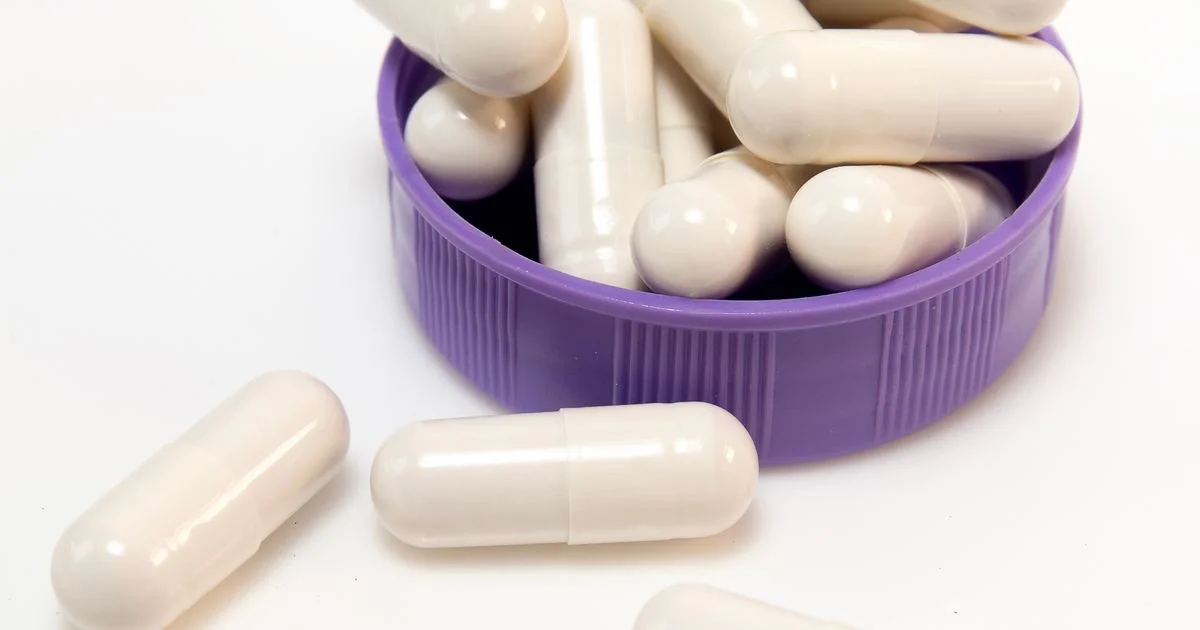
The probiotic aisle is arranged to make you feel underinformed: fifty-billion counts, refrigerated cases, and words like “biome” printed on every box. Shopping for the best probiotic supplements for gut health is easier once you accept that the honest answer depends almost entirely on why you are standing there — and that for several of the reasons people buy them, the evidence is thinner than the packaging suggests.
One framing point first. Probiotics are defined as live microorganisms that, taken in adequate amounts, confer a health benefit. Effects are strain-specific: guidance for using them is meant to name the strain, because different strains of the same species do different things. A product that lists only a species name is telling you less than it appears to.
Use case 1: You are starting antibiotics, the clearest case for the best probiotic supplements for gut health
This is the situation with the strongest evidence behind it, and it is not the one the marketing leads with.
Antibiotics clear the infection and take a lot of ordinary gut bacteria with them, and loose stools are a common result. Meta-analyses suggest probiotics may reduce the risk of antibiotic-associated diarrhea by roughly half. A 2017 review of 17 studies found probiotics taken alongside antibiotics were associated with about a 50% lower likelihood of it in non-hospitalized patients. In children, Lactobacillus rhamnosus GG at 10 to 20 billion CFU per day was associated with a 71% lower risk.
Timing appears to matter more than dose shopping. Benefits are largest when the probiotic starts within about two days of the antibiotic, not after the symptoms show up. Two practical notes:
- Start on day one of the course rather than waiting to see whether you need it.
- Look for a product that names an actual strain designation, not just “Lactobacillus blend.”
The American Gastroenterological Association’s guidance also conditionally supports probiotics for preventing C. difficile infection in patients taking antibiotics — though the guideline itself was criticized for not specifying strains in several of its recommendations, which limits how useful it is at the shelf.
Use case 2: Probiotic supplements for bloating and an unsettled gut
This is the most common reason people buy, and the evidence is genuinely mixed. Probiotic supplements for bloating sit in the part of the research where “might help some people” is the most accurate sentence available.
A 2018 review of 53 studies concluded probiotics may have beneficial effects on overall irritable bowel syndrome symptoms and abdominal pain, but the researchers could not identify which strains work best or draw firm conclusions about effectiveness. Another review found probiotics reduced the risk that IBS symptoms would persist or fail to improve by about 21%. Effects on bloating specifically vary by strain — some help, some do not.
The American Gastroenterological Association makes no recommendation for probiotics in IBS, and suggests their use in that setting mainly in the context of a clinical trial. That is not the same as saying they do nothing; it is saying the evidence is not strong or consistent enough to tell you which product to buy.
What that means in practice:
- Treat it as a trial with an end date. Give one product four to eight weeks, then decide. Rotating through five bottles in five weeks tells you nothing.
- Change one thing at a time. Starting a probiotic, cutting dairy and adding fiber in the same week makes the result uninterpretable.
- Write down what you are actually measuring. “Less bloated after dinner” is a usable outcome. “Better gut health” is not.
- Stop if nothing changes. There is no evidence that staying on an ineffective product eventually works.
Persistent bloating with weight loss, blood, or a sudden change in bowel habits is a reason to see a clinician rather than to try a fourth brand.
Use case 3: Probiotic supplements for women and vaginal health
Probiotic supplements for women are usually marketed around vaginal health, and the biology behind the claim is real even where the product evidence is not.
A healthy vaginal microbiome is dominated by four Lactobacillus species — L. crispatus, L. gasseri, L. iners and L. jensenii — which occupy roughly 70% of it during the reproductive years. The problem is delivery. Not all Lactobacilli survive stomach acid and bile salts, which is why researchers have moved toward studying products applied directly rather than swallowed.
Results are still inconsistent. When L. rhamnosus and L. gasseri were applied vaginally after antibiotics in two different populations, cure rates for bacterial vaginosis differed between them, which suggests the route of delivery is not the only variable that matters. Around 50% of women experience a recurrence of bacterial vaginosis within six months of antibiotic treatment, partly because antibiotics disrupt healthy microbiomes along with the target.
Researchers in this area are explicit that standards have not yet been set for testing vaginal probiotics or establishing the dose needed to colonize. A recurring infection is a conversation with a doctor, not a shelf decision.
Use case 4: Food first, before a single capsule
Fermented foods carry live cultures, cost less than supplements, and come with nutrition a capsule does not. Yogurt with live active cultures, kefir, kimchi, sauerkraut sold refrigerated rather than shelf-stable, miso and tempeh all qualify.

Two honest caveats. Food does not let you target a specific strain at a specific dose, which is exactly what the antibiotic-associated diarrhea research depends on. And shelf-stable pickled products are usually preserved in vinegar rather than fermented, so they carry no live cultures at all — the refrigerated case is where the live ones are.
It is also worth separating probiotics from prebiotics, which are non-digestible food components that feed the microorganisms already present. They are not interchangeable, and many products marketed as “synbiotic” simply contain both.
Use case 5: Probiotic supplements for kids, where caution outranks everything
Probiotic supplements for kids are the category where the gap between marketing and guidance is widest, and the safety notes are not boilerplate.
The FDA issued a warning in 2023 that premature infants given probiotics are at risk of severe, potentially fatal infections, and noted that these products have not gone through the agency’s premarket process. That warning is specific to preterm infants in hospital settings, and it is the reason any probiotic decision for a baby belongs with a pediatrician rather than a store aisle.
For older children, the picture is mixed rather than alarming. The American Gastroenterological Association recommends against probiotics for acute pediatric gastroenteritis in North America, and recent trials of L. rhamnosus GG for that condition found it no better than placebo. On the other side, Lactobacillus reuteri DSM 17938 was associated with successful treatment of colic in exclusively breastfed infants, defined as reducing crying by more than half.
Generally, probiotics are unlikely to cause harm in healthy people, and side effects are usually minor and self-limiting — gas being the common one. Serious infections have occurred, but in severely ill or immunocompromised patients. Anyone with a serious health condition, a suppressed immune system, or a child under a doctor’s care should ask before starting one.
Use case 6: Standing at the shelf, reading the label
Once you know why you are buying, the label sorts the options quickly.
- CFU is not a score. Products typically carry 1 to 10 billion CFU per dose, and some exceed 50 billion. Higher counts are not necessarily more effective.
- Look for CFU guaranteed through the expiration date, not at time of manufacture. Viability declines on the shelf, and the second figure tells you nothing about what you will swallow.
- US labeling rules are weaker than you would expect. Labels are only required to list total microorganism weight, not viable cell counts.
- Refrigeration depends on the product. Some need it, some are formulated to be stable at room temperature. Follow the package rather than a rule of thumb.
- There are no FDA-approved health claims for probiotics. As dietary supplements they do not go through premarket approval, and not everything labeled “probiotic” has a proven benefit.
Side-by-side by situation
| Your situation | What the evidence supports | What to be skeptical of |
|---|---|---|
| About to take antibiotics | Starting within two days, a named strain, a dose matching the research | Waiting until symptoms appear before starting |
| Ongoing bloating or IBS symptoms | A single product trialed for four to eight weeks with one measurable outcome | Claims that a specific blend is proven for bloating |
| Buying for vaginal health | Talking to a clinician, especially with recurring infections | Oral capsules assumed to reach and colonize the vagina |
| Wanting general “gut health” | Fermented foods from the refrigerated case | A high CFU count treated as a quality signal |
| Buying for an infant or preterm baby | A pediatrician’s direction, nothing else | Any over-the-counter product chosen without medical advice |
| Immunocompromised or seriously ill | Asking your care team before starting | The assumption that probiotics are risk-free for everyone |
Related Articles
- Best Smart Scale for Body Fat: What the Numbers Really Mean
- Best Cooling Mattress Pad for Hot Sleepers: No AC or Shared Bed
Frequently Asked Questions
These are the questions that tend to follow once someone realizes the label is not going to answer them.
Does a higher CFU count mean a better product?
No. Typical doses run 1 to 10 billion CFU, with some products above 50 billion, and higher counts are not necessarily more effective. The strain and whether the count is guaranteed through the expiration date matter more than the headline number.
How long should I give a probiotic before deciding it is not working?
Four to eight weeks on one product, changing nothing else, with a specific symptom you are tracking. If nothing shifts in that window, there is no evidence that continuing will eventually help.
Can I get the same benefit from yogurt or kimchi?
For general use, fermented foods from the refrigerated case are a reasonable place to start and bring nutrition a capsule does not. What food cannot do is deliver a specific strain at a specific dose, which is what the strongest research — the antibiotic studies — relies on.
Is it safe to just try one?
For most healthy adults, probiotics are unlikely to cause harm, and side effects are usually minor and short-lived, such as gas. Serious infections have occurred in severely ill and immunocompromised people, and the FDA has warned specifically about preterm infants. If you have a serious condition, a suppressed immune system, or you are buying for a baby, ask a clinician first.
Conclusion
The clearest use for a probiotic is the least advertised one: alongside a course of antibiotics, started early, with a named strain. For bloating, women’s health and children, the research is thinner than the shelf implies, and the useful move is a single time-limited trial or a conversation with a clinician rather than a bigger number on the box.


3 Comments
Comments are closed.